A Webflow blog designed for local SEO

Taxi Liberty already had a working showcase site in Poitiers: services clearly presented, trust established, incoming calls coming in. But to win organic traffic without paying for every click, they were missing a solid editorial layer. My mission was to design the mockups and develop a blog directly integrated into the existing Webflow site, raising the technical level and opening new local entry points on Google.
The Challenge: A Blog That Works for Local SEO
Building a blog is not just adding a page with a list of articles. It means building a content ecosystem that serves the brand, the users, and Google — in that order. That meant extending the visual identity without altering it, structuring information so each article has a clear role and entry points, and laying the technical groundwork for content to be found, understood, and well-positioned for local searches.
Figma Mockups: Three Custom Templates
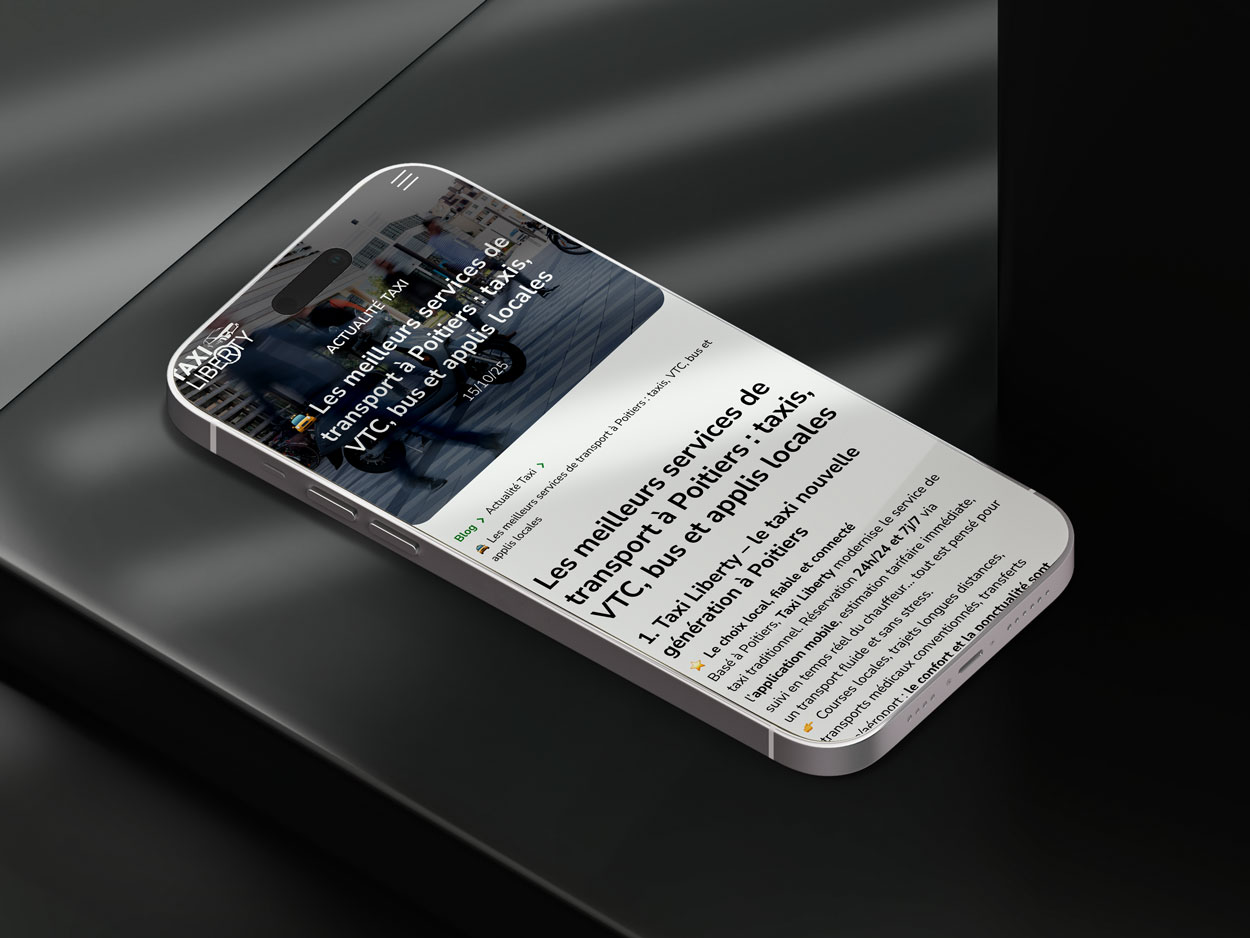
Before any development, I designed three mockups in Figma: the main blog page, category pages, and the article template. Each one follows the existing brand guidelines precisely — typography, colors, visual rhythms — for a result that feels fully native to the site, as if the blog had always been there.
The mockups served as validated references before entering Webflow, avoiding costly back-and-forth during development.

Design & Reading Experience
A good blog is felt before it's read. I worked carefully on the visual hierarchy of H1/H2/H3 headings, preview cards that already tell a story (useful title, short excerpt, thematic direction), and an article layout that invites scrolling: main image with caption when relevant, highlighted quotes, simple and visible call to action. The result is a continuous experience where the reader forgets the tool and focuses on the content.
Technical SEO: What Actually Matters
On the technical side, I implemented what genuinely impacts indexing: clean semantic structure, structured data (Article, Breadcrumb), dynamic metadata (titles, descriptions, Open Graph), and a sitemap that correctly exposes the new pages. Images are optimized and loaded intelligently, non-critical scripts are deferred, and the Rich Text remains lightweight. These are details invisible to the user, but decisive for performance and search ranking.
Loading time was reduced by 1.5 seconds compared to the initial version.

Webflow CMS & Editorial Autonomy
The Taxi Liberty team now publishes entirely independently. Dynamic templates guarantee total consistency, even when multiple contributors are involved. I also provided an editorial guide to maintain SEO discipline over time: useful titles, clear introductions, correctly filled SEO fields.
The Concrete Impact
Each article or category becomes a potential entry point for a local search: events in Poitiers, practical taxi information, administrative procedures for drivers. Internal linking subtly pushes towards the business pages, mobile readability increases time on site and reduces bounce rate, and each writing effort translates into measurable results rather than lost content.
What Was Delivered
Three Figma mockups (Blog, Categories, Article) faithful to the existing brand identity. Blog page, category pages, and article template fully developed in Webflow CMS with robust templates and Client-First nomenclature. Complete technical SEO setup and an editorial guide to stay on track over time.


.jpg)